Blog
AEO ROI Calculator: Building a Defensible Investment Model for AI Search
Build a defensible AEO investment model: break-even deals, 90-day leading indicators, revenue at risk, and a kill criterion finance will accept.
Which GEO and AEO techniques have real evidence in 2025-2026? Proven tactics, clear labels, and cited sources for B2B content teams.
Build a defensible AEO investment model: break-even deals, 90-day leading indicators, revenue at risk, and a kill criterion finance will accept.
Position-1 CTR fell 58% when AI Overviews appear. Learn what AEO and GEO add to SEO, where they overlap, and how to frame the budget case for a CFO.
At $18K - $36K out before a verdict, an agency retainer is a real commitment. Here are the two gates to clear and the break-even arithmetic to run first.
Request a quote and our experts will contact you within 24 hours with tailored solutions and pricing.
aeogeo.app
Last updated: Oct 22, 2026
By Ishan Manchanda, Co-Founder, GrowthSpree | Ishan Manchanda co-founded GrowthSpree, a B2B SaaS marketing consultancy that has managed $60M+ in ad spend across 300+ companies. He has been featured in Silicon Valley Times, SaaS Mag, and the Unbounce podcast. GrowthSpree operates Salient, a managed AEO/GEO service - that affiliation is disclosed wherever Salient data appears below.
Generative engine optimization (GEO) and answer engine optimization (AEO) are content disciplines that increase citation frequency in AI-generated answers - and in 2025-2026, only a handful of techniques have primary-source evidence behind them.
"Nearly all business buyers (94%) report using AI during their buying process," (Barbara Winters, Forrester Research, 2026). The question is no longer whether AI answers influence B2B purchasing. It is which techniques for earning citation have real evidence, and which are vendor speculation.
This guide labels every technique: peer-reviewed evidence, large-sample industry data, or practitioner hypothesis only. No invented statistics. No uncited claims.
Key Takeaways
- Only 38% of AI citations now come from top-10 organic results, down from 76% in mid-2025 (BrightEdge/ALM Corp via PipeRocket, February 2026). Organic rank and AI citation are largely independent signals.
- Long-form guides earn Perplexity citations at a 43% rate; press releases earn them at 0.04% (GeoAura, 2026). Content format is the highest-leverage decision.
- Keyword stuffing performed 10% below the unoptimized baseline in the Princeton GEO benchmark (Aggarwal et al., KDD 2024). It actively harms citation probability.
- AI recommendation lists repeat identically less than 1% of the time (SparkToro, January 2026, 2,961 runs). Measure citation as a frequency range across N runs, not a single check.
- A July 2026 peer-reviewed survey of 45 GEO studies found 10 of 15 initial GEO heuristics were neutral or negative in tested conditions (arXiv, 2607.14035). Engine-specific strategies are now necessary, not optional.
Generative engine optimization (GEO) is the practice of structuring content so AI answer engines - ChatGPT, Perplexity, Google AI Overviews, Gemini, and Claude - synthesize and cite it. Brands are investing because 94% of business buyers now use AI during purchasing (Forrester, 2026). Organic ranking no longer guarantees inclusion: only 38% of AI citations now come from top-10 organic results, down from 76% in mid-2025 (BrightEdge/ALM Corp via PipeRocket, February 2026).
Answer engine optimization (AEO) is the parent discipline: making content directly extractable and citable by any AI answer engine. GEO is the execution layer - the specific techniques applied to each engine's retrieval logic.
The arithmetic is direct. Ahrefs Brand Radar analysis of 15,000 prompts found only 8% overlap between ChatGPT citations and the Google top-10, and only 28% for Perplexity (Ahrefs Brand Radar via Omnibound, 2026). A team spending all its effort on Google rankings is optimizing for the wrong signal.
"B2B buying will be defined by tangible evidence, accountability, and continued buyer empowerment," (Forrester Research, The State Of Business Buying, 2026). AI answer engines are where that evidence is evaluated before a sales rep is ever contacted.
Share of answers is the percentage of a fixed prompt set in which a brand is cited, measured across repeated runs. AI recommendation lists repeat identically less than 1% of the time (SparkToro, January 2026, 2,961 runs). A single manual check tells you almost nothing. Report a frequency range - cited in X of N runs - not a binary yes or no.
GEO (generative engine optimization) is the practice of making content citable by AI answer engines in synthesized prose responses, rather than rankable in a list of links. SEO optimizes for a position on a results page. GEO optimizes for inclusion in a generated answer that may produce zero clicks. The measurement unit shifts from ranking and click-through rate to citation frequency, because AI recommendation lists almost never repeat identically (SparkToro, 2026).

| Dimension | SEO | GEO / AEO |
|---|---|---|
| Primary output | Ranked link on results page | Cited passage in synthesized answer |
| Click dependency | High (CTR is a core metric) | Often zero-click; influence precedes the visit |
| Measurement unit | Position, impressions, CTR | Citation frequency across N prompt runs |
| Content format priority | Any rankable format | Long-form guides, comparisons, tutorials |
| Off-page signals | Backlinks, domain authority | Third-party corroboration, community presence |
| Overlap areas | Crawlability, content quality, authority | Same - prerequisites for both |
The overlap is real. A site AI crawlers cannot read cannot be cited, just as a site search crawlers cannot read cannot rank. The break is equally real: a page in position 1 on Google is not automatically cited.
The central development is the collapse of the organic-rank-to-AI-citation proxy. Only 38% of AI citations come from top-10 organic results as of February 2026, down from 76% in mid-2025 (BrightEdge/ALM Corp via PipeRocket, 2026). The remaining 62% of citations come from outside the top 10. GEO cannot be folded into an existing SEO program without structural additions: separate content formats, separate measurement, and engine-specific off-site strategies.
A July 2026 peer-reviewed survey of 45 GEO studies (arXiv, 2607.14035) confirmed that general GEO heuristics transfer poorly across engines and domains. One tactic list applied uniformly across all AI platforms is likely to underperform engine-specific approaches.
Three categories have clear empirical support. First, answer-fit content formats: long-form guides earn Perplexity citations at a 43% rate; press releases earn 0.04% (GeoAura, 2026). Second, content freshness: a vendor-reported synthesis by GeoAura (2026) associates updates within 90 days with a 67% higher citation rate on Perplexity - primary studies are not individually named. Third, confirmed crawler access is a prerequisite: a page an AI crawler cannot fetch cannot be cited, regardless of content quality.
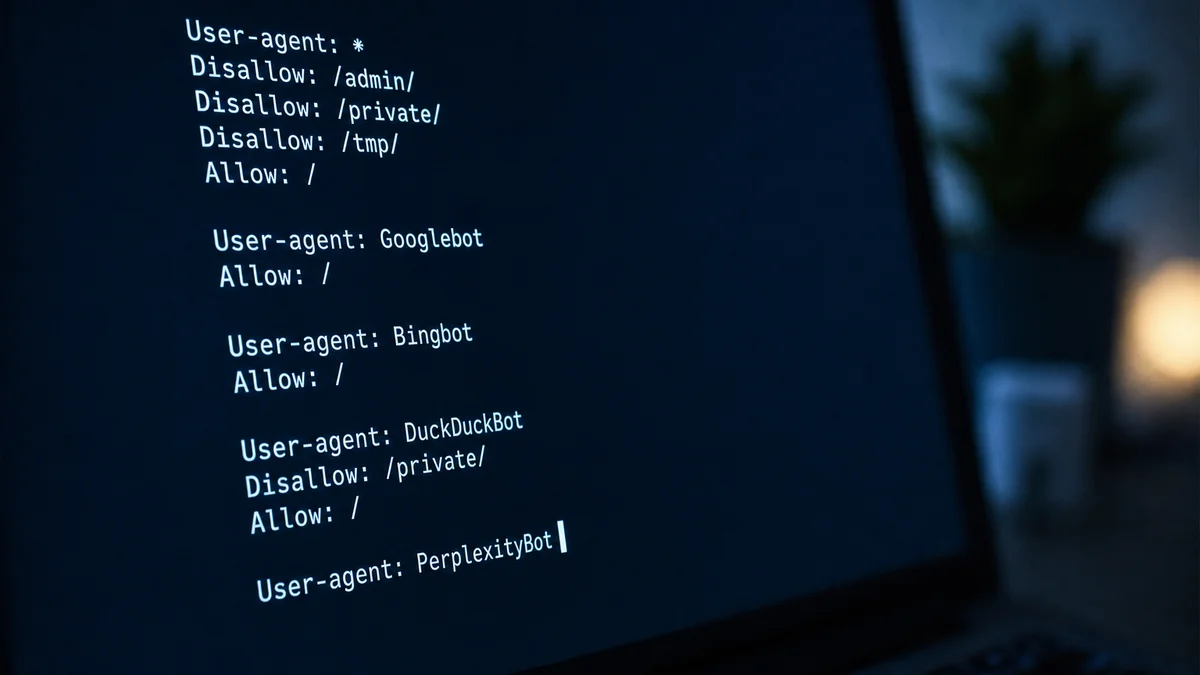
Crawler access is the ability of AI retrieval bots to fetch and parse a public web page. Without it, no other technique matters.
Four bots control most AI citation access:
| Bot | Engine | Purpose | Recommended policy |
|---|---|---|---|
| OAI-SearchBot | ChatGPT search | Retrieval (user-triggered) | Allow on all public paths |
| PerplexityBot | Perplexity | Retrieval (user-triggered) | Allow on all public paths |
| GPTBot | ChatGPT | Training and retrieval | Decide by IP position; allow retrieval paths |
| ClaudeBot | Claude | Training and retrieval | Rate-limit and log; allow marketing paths |
| Google-Extended | Google AI Overviews | Training | Decide separately from the search crawl |
Cloudflare began blocking AI crawlers by default in July 2025. Most B2B marketing teams did not notice the CDN setting change. Check robots.txt and CDN WAF rules before assuming any other technique can work.
One site reported ClaudeBot at 700,000 hits in a single month, tripping a bandwidth limit (HN thread, February 2026). The correct response is rate-limiting and path-based policy - not a blanket block that removes the brand from AI answers entirely.
The citation rate gap between formats is not marginal. Long-form guides earn citations at a 43% rate. Comparison articles earn 38%. How-to tutorials earn 35%. Press releases earn 0.04% (GeoAura, citing authoritytech.io/DigitalApplied, 2026). That is a three-order-of-magnitude difference. Every press release published in place of a substantive guide reduces citation probability.
Structural requirements for answer-fit format:
A vendor-reported synthesis by GeoAura (2026) associates content updated within 90 days with a 67% higher citation rate on Perplexity. The primary studies behind this figure are not individually named by GeoAura, so treat it as a directional signal, not a peer-reviewed finding. What is structurally confirmed: Perplexity uses real-time retrieval, and ChatGPT search relies primarily on the Bing index. A content calendar optimized for Perplexity (high-frequency updates, short freshness windows) differs from one optimized for ChatGPT (Bing indexation, inbound authority).
Reddit accounts for 46.7% of Perplexity's top-ten cited sources. YouTube accounts for 13.9%. Gartner accounts for 7.0%. These figures come from an analysis of 680 million AI citations, as reported by GeoAura (2026) citing Profound data. For B2B brands, corroboration from analyst reports, community discussions, and video content on authoritative platforms may matter as much as the brand's own pages - and for Perplexity specifically, it may matter more.
Our data: Salient by GrowthSpree (GrowthSpree's managed AEO/GEO service, launched September 2026) reports 48,800 citations and $165,000+ in pipeline across its clients since launch (Salient pitch deck; affiliation disclosed).
Keyword stuffing is actively harmful - it performed 10% below the unoptimized baseline in the Princeton GEO benchmark (Aggarwal et al., KDD 2024, GEO-bench across 10,000 queries and 9 domains). Llms.txt has no confirmed citation impact as of mid-2026. A July 2026 peer-reviewed survey of 45 GEO studies found 10 of 15 initial GEO heuristics were neutral or negative in tested conditions (arXiv, 2607.14035), directly challenging most practitioner playbooks.
| Technique | Evidence level | Verdict |
|---|---|---|
| Crawler access (robots.txt, CDN) | Logical prerequisite | Do first, before any other step |
| Long-form guide format | Large-sample industry data (GeoAura, 2026) | Implement |
| Content freshness (90-day updates) | Vendor-reported synthesis (GeoAura, 2026; primary studies unnamed) | Implement for Perplexity; treat as directional |
| Third-party corroboration | Citation-source data (680M citations, as reported by GeoAura, 2026) | Build off-site strategy |
| Answer-first paragraph structure | Supported by format citation-rate data | Implement |
| Keyword stuffing | Peer-reviewed: −10% vs. baseline (KDD 2024) | Do not use |
| Llms.txt | No confirmed citation impact as of 2026 | Track; do not prioritize |
| Schema markup as a citation lever | No peer-reviewed evidence of citation uplift | Use for structured data compliance; not as a GEO fix |
| Prompting AI to "remember" the brand | No mechanism confirmed; contradicted by non-determinism | Discard |
The July 2026 survey also found that heuristics transfer poorly across engines. Any tactic list from 2024 or early 2025 should be treated with caution unless it names the engine, the domain category, and the date of the supporting study.
Perplexity uses real-time retrieval and weights freshness heavily. Reddit accounts for 46.7% of its top-ten cited sources, YouTube 13.9%, and Gartner 7.0%, based on 680 million citations as reported by GeoAura (2026), citing Profound data. ChatGPT citations show an 87% match to the Bing index (Ahrefs Brand Radar via Omnibound, 2026). These are structurally different citation systems. They require distinct content calendars and off-site strategies.
Per-engine citation timelines vary. The ranges below are practitioner-reported planning estimates, not peer-reviewed findings. Use them as working assumptions, not guarantees.
| Engine | Approximate timeline for structural fixes to appear in citations |
|---|---|
| Perplexity | 2-7 days (real-time retrieval) |
| ChatGPT | 7-21 days (Bing index crawl lag) |
| Claude | 14-45 days |
| Google AI Overviews | 14-45 days |
Non-deterministic outputs mean the same fix produces different citation rates across runs. Measure over a fixed prompt set, never a single check.
Cloudflare began blocking AI crawlers by default in July 2025 (Cloudflare Radar, June 2025), and that CDN rule change can silence a brand across AI answers until corrected. Four evidence-backed steps follow without agency involvement: audit crawler access, reformat top pages, add AI attribution to the lead form, and run a fixed monthly prompt set reporting citation frequency as a range across N runs.

Days 1-14: Access audit
Days 15-45: Content audit and reformat
Days 46-90: Measurement setup and first read
Track these five metrics with stated methods:
Ignore single-run citation checks. Ignore any metric a vendor cannot explain the method behind.
GEO and AEO techniques in this guide do not apply to companies with fewer than 15 indexable public pages, client-side-only CMS rendering, or AI crawlers blocked at the CDN level without the marketing team knowing. If those foundational problems are unresolved, content-layer optimization produces no measurable citation change. This guide also does not address B2C companies, local-service businesses, or marketplace-only sellers, whose AI-answer dynamics differ substantially.
Scale and budget matter too. Six months at $1,500 per month is $9,000-equivalent to 0.4 closed deals at $30,000 ACV and 75% gross margin (illustrative; not financial advice). At $100,000 ACV, break-even is 0.12 deals. Those numbers should drive the commitment decision, not a vendor's citation count on their own pitch deck.
Generative engine optimization (GEO) is the practice of structuring content so AI answer engines - ChatGPT, Perplexity, Google AI Overviews, Gemini, Claude - synthesize and cite it in generated responses. SEO targets ranked links on a results page; GEO targets inclusion in a synthesized prose answer, which is often zero-click. The measurement unit shifts from position and clicks to citation frequency across a fixed prompt set run multiple times.
Perplexity uses real-time retrieval and weights freshness heavily. Reddit accounts for 46.7% of its top-ten cited sources, YouTube 13.9%, and Gartner 7.0%, based on 680 million citations as reported by GeoAura (2026), citing Profound data. Brands should publish long-form guides updated within 90-day windows, build presence on high-authority community platforms, and keep all public pages server-rendered so retrieval bots can parse them.
Generative engine optimization is the discipline of ensuring a brand appears in AI-generated answers during buyer research. CMOs face it because 94% of business buyers now use AI during purchasing (Forrester, 2026), AI answer engines have overtaken vendor websites as the most cited research interaction, and 69% of B2B buyers chose a different vendor than planned after a chatbot recommendation (G2, March 2026, n=1,076). Organic clicks are shrinking while AI-answer influence grows.
Techniques with peer-reviewed or large-sample evidence include confirmed crawler access (prerequisite), answer-fit formatting in long-form guides and comparison articles (43% and 38% Perplexity citation rates, per GeoAura 2026), and third-party corroboration. Keyword stuffing performed 10% below the unoptimized baseline in the Princeton GEO benchmark (Aggarwal et al., KDD 2024). Llms.txt has no confirmed citation impact as of mid-2026.
Going into 2026, the critical change is the confirmed independence of AI citation from organic rank: only 38% of AI citations now come from top-10 organic results, down from 76% in mid-2025 (BrightEdge/ALM Corp via PipeRocket, February 2026). A July 2026 peer-reviewed survey of 45 GEO studies also found that general GEO heuristics transfer poorly across engines and domains (arXiv, 2607.14035), making engine-specific strategies necessary rather than optional.
Scaling GEO across product lines requires mapping the buying committee's query angles before producing content. Forrester (2026) reports approximately 13 internal and 9 external stakeholders influence a typical B2B purchase (Forrester) - each persona runs their own AI queries at different buying stages. A Buying Committee Query Map (persona by stage) lets content teams produce targeted answer pages for each role rather than a single catch-all guide.
The most evidenced techniques are: (1) answer-fit formatting - long-form guides earn Perplexity citations at a 43% rate versus 0.04% for press releases (GeoAura, 2026); (2) third-party corroboration on high-authority platforms; (3) confirmed crawler access. Content freshness within 90 days is associated with higher Perplexity citation rates per a vendor-reported synthesis by GeoAura (2026), though primary studies are not individually named. Keyword stuffing is counter-productive per the Princeton GEO benchmark (arXiv, 2024).
aeogeo.com publishes AEO and GEO guidance for B2B revenue leaders - CMOs, CROs, CFOs, CTOs, and practitioners - with every statistic linked to a named primary source and date. The site is free, ungated, and crawlable by AI engines by design. It covers crawler access, answer-fit formatting, citation measurement, and budget planning, and labels each technique as proven, supported by industry data, or practitioner hypothesis.
Technical buyers rely heavily on Perplexity and run their own LLM queries. Key practices: keep product and integration documentation server-rendered and publicly crawlable; update docs within 90-day windows; build presence in developer community forums (Reddit accounts for 46.7% of Perplexity's top-ten cited sources, as reported by GeoAura 2026); and structure comparison and tutorial pages - formats earning 38% and 35% citation rates respectively - ahead of press releases (0.04%, GeoAura 2026).
Four evidence-backed steps require no agency: (1) audit robots.txt and CDN settings for GPTBot, OAI-SearchBot, PerplexityBot, and ClaudeBot - Cloudflare began blocking AI crawlers by default in July 2025 (Cloudflare Radar, June 2025); (2) reformat top pages into long-form guide or comparison format with a direct answer in the first paragraph; (3) add "AI assistant" to the lead-form attribution field and configure a GA4 AI-referral channel group; (4) run a fixed 10-prompt set monthly, reporting citation frequency as a range across N runs.
ChatGPT citations show an 87% match to the Bing index (Ahrefs Brand Radar via Omnibound, 2026), making Bing indexation and inbound-link authority the primary lever. Perplexity uses real-time retrieval with strong freshness and community-source weighting. Techniques that work across both engines: confirmed crawler access, long-form answer-fit content, and third-party corroboration from sources each engine trusts.
The GEO and answer engine optimization (AEO) techniques with real evidence in 2025-2026 are fewer and more specific than most practitioner guides suggest. Crawler access is a prerequisite. Long-form guide and comparison formats outperform press releases by three orders of magnitude on Perplexity citation rate. Keyword stuffing actively reduces citation probability. No single tactic list applies uniformly across ChatGPT, Perplexity, Claude, and Google AI Overviews - a July 2026 peer-reviewed survey of 45 studies confirms it (arXiv, 2607.14035).
The measurement implication is equally clear. AI recommendation lists repeat identically less than 1% of the time (SparkToro, January 2026). Report citation frequency as a range across N runs per fixed prompt. Set a 90-day access-and-format baseline before committing to any retainer. Judge techniques against primary-sourced evidence, not vendor claims.
For the weekly brief on platform changes, new citation data, and tactic updates - sourced, dated, and labeled - visit aeogeo.com.
© 2026 aeogeo.app All rights reserved.